Toyota Production System Tools & Technique

Toyota Production System Tools

Toyota Production System Tools & Technique

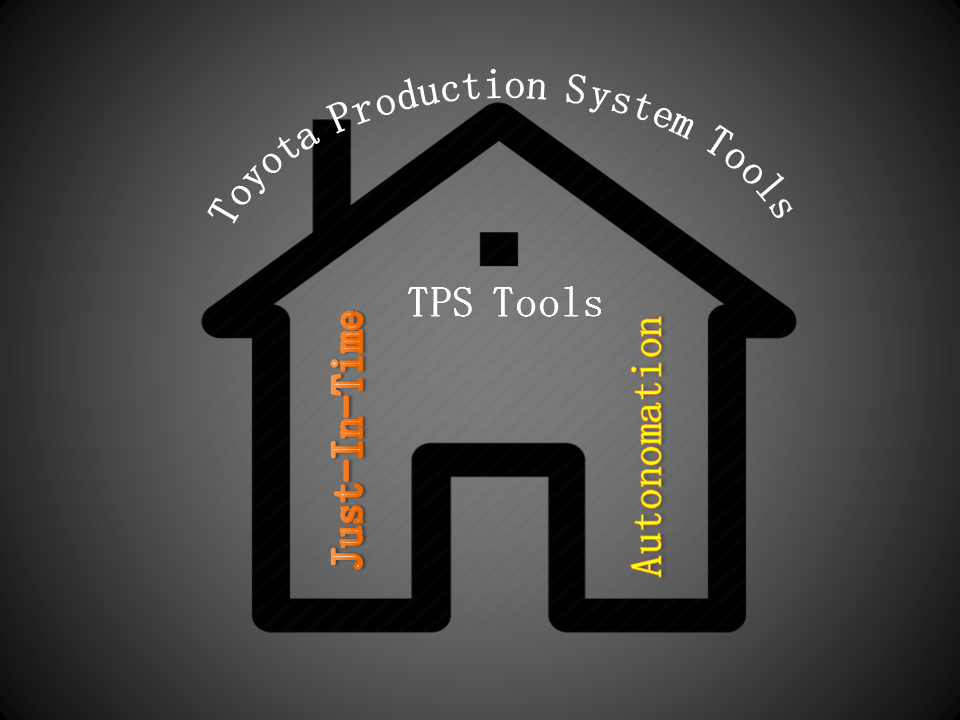
Toyota Production System Tools: Mr. Taiichii Ohno of Toyota Motor Company had developed the Toyota production system. It is a type of JIT (Just-In-Time) Production system using the “KANBAN” pull system of production. It is also known as a lean production system. The Prototype of TPS systems is JIT and Lean Production.

DOWNLOAD [QA Tools, QMS Template in Excel and Word form]
Toyota Production System Tools

In the 1950s, Eiji Toyoda and Taiichii Ohno of Toyota Motor Company adopted a lean Production system based on JIT (Just-In-Time). Eiji Toyoda had visited Ford Motors to study the mass production system of the Ford Plant with the purpose of establishing the same system in his Toyota Motor Company. However, after visiting of ford motor company, he was not influenced by the suitability of the mass production system for his plant he asked his production engineer Taiichii Ohno to design a must suitable system for his plant. The system developed by Taiichii Ohno was later termed as Toyota Production System.

Several elements of JIT production system are:

  1. Small lot production
  2. Level Production
  3. TPM (Total Productive Maintenance)
  4. Pull production system
  5. Quality
  6. Flexible Resources
  7. Cellular Layouts
  8. Kanban System
  9. Quick set-up
  10. Supplier networks

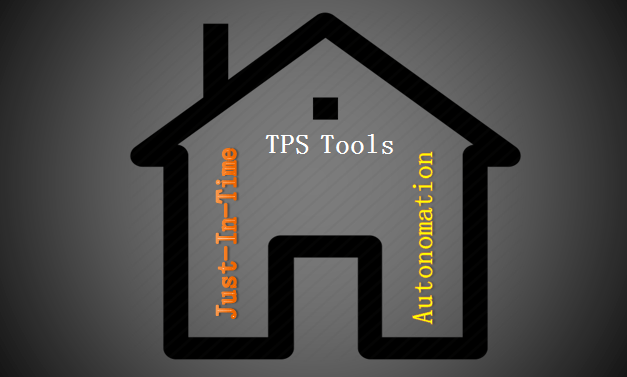
Two Major concepts of the Toyota production system are;

  • JIT (Just-In-Time)
  • Autonomation

The principles of Toyota’s production system include;

  1. Quality at the source
  2. Pull production
  3. Supplier Involvement
  4. Cellular Layouts
  5. Flexible resources
  6. Reduced set-up time
  7. Small lot production
  8. Employee involvement & Empowerment
  9. Equipment Maintenance
  10. Uniform production levels

The above elements and principles were the most important input to enhance mass production with zero defects. Rather than this one more concept also was important there to success the effective functioning of the TPS system was “Autonomation”.

Autonomation:

Autonomous defect control which depends on both automatic stop devices. It ensures that 100% good units flow to the subsequent operations.

Below are some mechanisms used for Autonomation such as?

  1. Baka-yoke/ Poka-yoke
  2. Andons
  3. Yo-i-don system.

Useful Articles:

Error Proofing Understanding & Implementation of IATF 16949 Clauses 10.2.4

Swot Analysis of a Company Challenges

Pareto Chart Example of Manufacturing Units

Histogram Example | Foundry Industries Examples.

Rework vs Repair |IATF Requirement for Control of Reworked/ Repaired Product.

Thank you for ReadingKeep visiting Techiequality.Com

Popular Post:

Toyota Production System History

Toyota Production System History

Toyota Production System History

Toyota Production System History: In the 1800s, the Toyoda family has started the first business as a textile firm but later in 1935, they began producing cars. Initially, the quality of the cars was very poor. In 1950, Eiji Toyoda visited the Ford Motor Company to learn and establish the methods of mass production in their Toyota car manufacturing plant. After months of studying the plant, Toyoda concluded that Ford’s production system was not suitable in Japan. In the US, only one type of car was produced in a plant. Toyoda would like to produce a variety of cars in just one plant. Also, Toyota Company has so many other problems as a short supply of capital that prevented him from investing heavily in modern equipment and technology and the strong Japanese company labours unions, Because of which he could not readily hire workers.

Toyota Production System Tools & Technique

Toyota Production System History

Finally, Toyoda has decided that Ford production system would not be suitable for their car manufacturing company and called production engineer Taiichii Ohno to aid him in developing a workable system taking into consideration the restrictions of his company. Because of the restrictions Taiichii Ohno had to design a system that would be more efficient, less costly, and more flexible, would be less wasteful than traditional mass-production methods. The system developed by taiichii Ohno and Toyoda was later termed as “Toyota Production System”.

The Prototypes of the TPS (Toyota Production System” is the JIT (Just-In-Time) & Autonomation. The Objective of the JIT was to produce the necessary units in the quantities needed at the time they were needed. Just-in-time is a popular name but some companies call it as Continuous-flow manufacturing, Stockless production, management by sight, short-cycle manufacturing and time-based competition, etc.

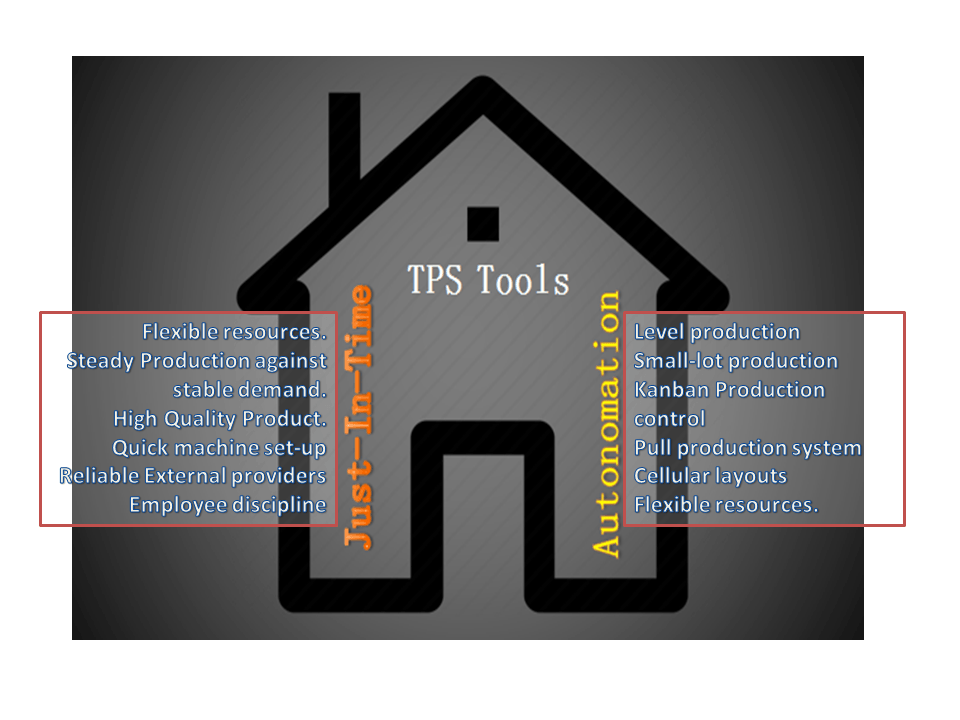
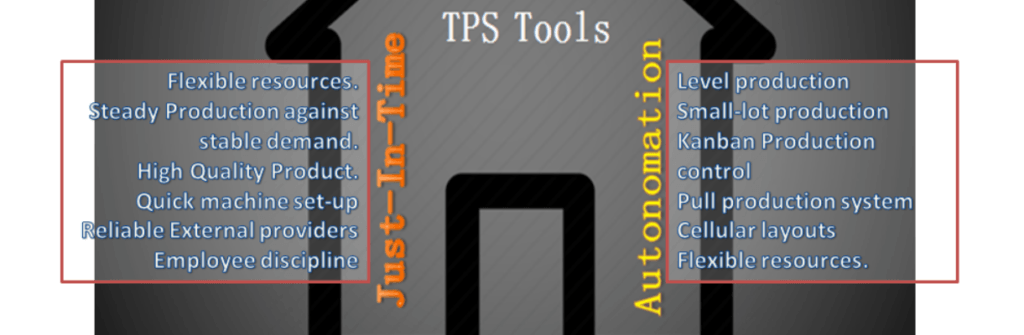
The major elements of Just-In-Time are;

  1. No machine breakdowns
  2. Flexible resources
  3. Steady Production against stable demand.
  4. High-Quality Product.
  5. Quick machine set-up
  6. Reliable External providers
  7. Employee discipline

The word Autonomation means automation with human touch or autonomous defect control.

The Principles used in TPS (Toyota Production System are;

Toyota Principles

  1. Supplier network
  2. Quality at the source
  3. TPM
  4. Quick set-up
  5. Level production
  6. Small-lot production
  7. Kanban Production control
  8. Pull production system
  9. Cellular layouts
  10. Flexible resources.
  11. Autonomation

Useful Articles:

Error Proofing Understanding & Implementation of IATF 16949 Clauses 10.2.4

Swot Analysis of a Company Challenges

Pareto Chart Example of Manufacturing Units

Histogram Example | Foundry Industries Examples

QA & QC Tools Template

Thank you for reading…Keep visiting Techiequality.Com

I hope the above articles “Toyota Production System History” is useful to you…

Popular Post: